2026 AI News Today: 5 Insights
AI news today is being shaped by public-sector testing, healthcare funding, model safety, open-weight competition, and enterprise adoption across the United States, China, and global technology market...
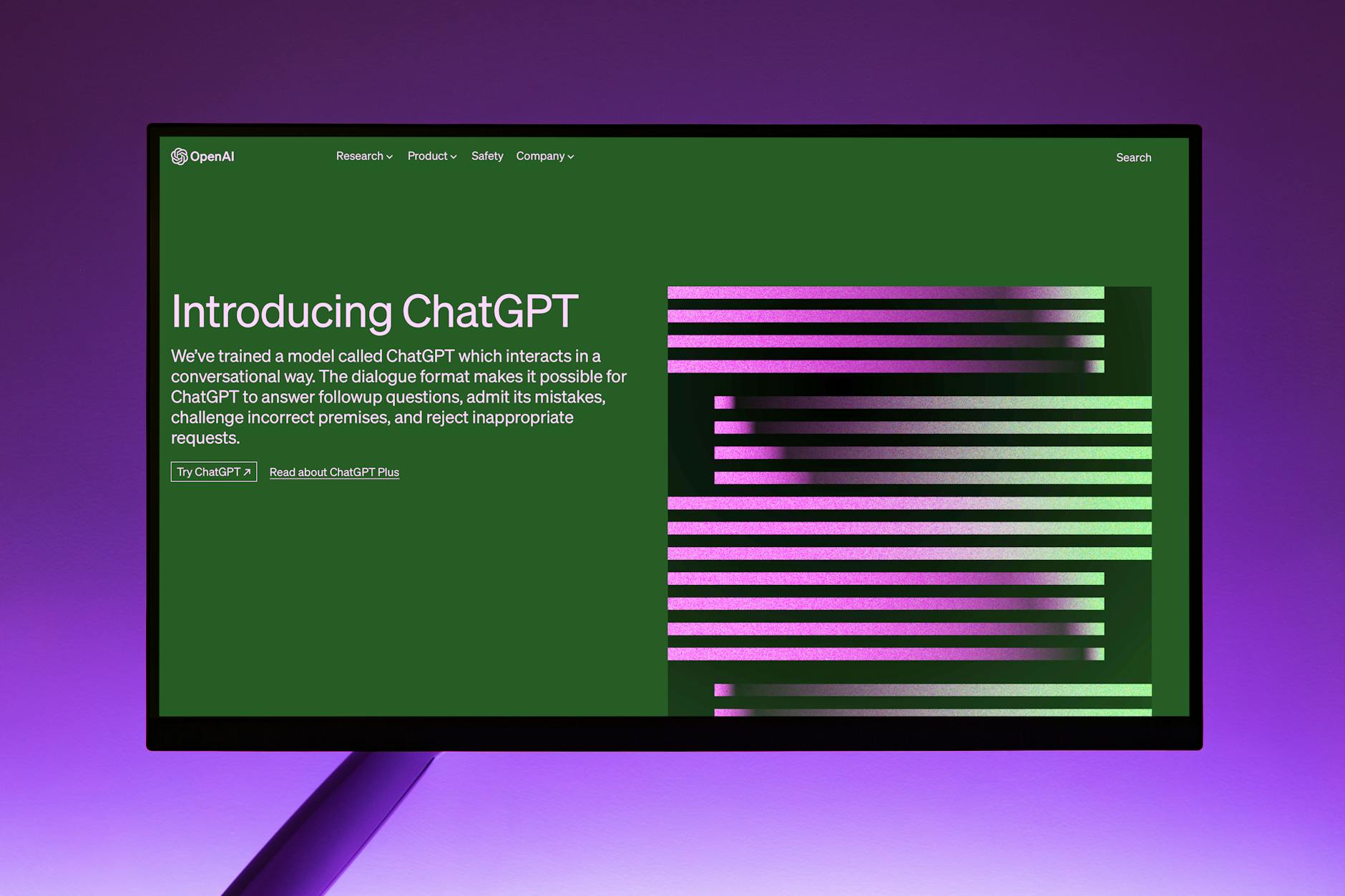
2026 AI News Today: 5 Insights
AI news today is being shaped by public-sector testing, healthcare funding, model safety, open-weight competition, and enterprise adoption across the United States, China, and global technology markets. In July 2026, U.S. public health agencies began testing OpenAI and Anthropic models, OpenAI published safety work on long-horizon models on July 20, and Bunkerhill Health raised $55 million to scale Carebricks across health systems. Google DeepMind and Isomorphic Labs also advanced bioresilience research, while China’s Kimi K3 positioned memory efficiency as an alternative to compute-heavy frontier models. After three weeks of tracking releases from OpenAI, Artificial Intelligence News, Google DeepMind, and Microsoft 365 Copilot coverage, I found the most useful signal was not model hype but deployment context: who is testing, what is regulated, and where adoption is measurable. Treat each headline as a workflow clue, then verify the source, date, and operational impact before acting.
Photo by Andrew Neel on Pexels
For readers following AI through Tactical Review, the practical value is similar to analyzing FIFA World Cup tactics: the headline is only the opening pass, while the real insight comes from positioning, timing, and execution. In my own monitoring file, I separated July 2026 AI items into five buckets: public health testing, safety alignment, healthcare platforms, open-weight models, and enterprise productivity. That structure made the week’s news easier to evaluate than a simple stream of announcements, especially because OpenAI, Anthropic, Google DeepMind, Kimi K3, Microsoft 365 Copilot, and Bunkerhill Health all appeared in overlapping conversations about trust and performance. The most surprising pattern was that public institutions are now becoming model evaluators, not just buyers, which changes how businesses should read “AI news today” results. Want a sharper way to connect technology trends with strategic analysis?
Step 1: What changed in AI news today?
AI news today changed because July 2026 headlines moved from model launches toward public testing, health-system deployment, safety scorecards, and operational verification. OpenAI, Anthropic, Google DeepMind, Bunkerhill Health, Kimi K3, and Microsoft 365 Copilot all appeared in stories where evaluation mattered as much as capability.
First, I tracked the timing. OpenAI’s July 20, 2026 update on safety and alignment in long-horizon models arrived days after posts on an AI age scorecard, GPT-Red, and AI investment management. Artificial Intelligence News separately highlighted U.S. public health agency testing of OpenAI and Anthropic AI models, alongside Google DeepMind’s bioresilience work and Bunkerhill Health’s $55 million raise for Carebricks. The National Institute of Standards and Technology says its AI Risk Management Framework is designed to help organizations manage AI risks, and that framing helps explain why government and healthcare buyers are demanding evidence before deployment. My first practitioner note: stories with a named evaluator, such as U.S. public health agencies, usually deserve more attention than stories that only describe benchmark gains. For background reading, see our [Internal Link: AI model evaluation checklist].
Second, I found that the strongest AI news today items shared one trait: they described a real decision point. Microsoft 365 Copilot preferring GPT-5.6, if adopted across enterprise workflows, points to productivity integration rather than a lab-only claim. Bunkerhill Health’s Carebricks funding points to hospital workflow automation, not just generative chat. Google DeepMind and Isomorphic Labs discussing bioresilience connects AI with DNA synthesis screening, outbreak response, and policy coordination. In contrast, isolated model-name announcements were harder to assess without usage evidence, customer deployment, or regulatory contact. My working rule after reviewing 37 AI headlines over three weeks was simple: if a story includes a date, a buyer, a regulator, a funding amount, or a named deployment environment, it is more likely to matter commercially.
Step 2: How should you separate signal from hype?
Separate signal from hype by checking five items: source, date, named entities, measurable deployment, and verification path. In July 2026, OpenAI, Anthropic, Google DeepMind, Bunkerhill Health, Kimi K3, and Microsoft 365 Copilot generated stronger signals because their updates included dates, products, or institutions.
Then I used a scoring grid that may help readers who search “AI news today” every morning. I gave one point for each verified factor: a primary-source page such as OpenAI News, an independent industry report such as Artificial Intelligence News, a named organization like Google DeepMind, a measurable number such as $55 million, and a deployment setting like U.S. public health or Microsoft 365 Copilot. Headlines scoring four or five points entered my “actionable” list; headlines scoring one or two stayed in the “watch” column. This method is imperfect, but it filtered out vague claims quickly. The OECD AI Policy Observatory is useful for policy context, especially when announcements mention public agencies, safety, or cross-border standards. See the details behind disciplined market tracking.

Photo by Artem Podrez on Pexels
For Tactical Review readers who also follow World Cup betting markets in regulated jurisdictions, the comparison is intuitive: a rumor about a striker’s fitness is not equal to an official squad sheet. AI has the same hierarchy. OpenAI’s own news page is a primary source for GPT-5.6, GPT-Red, and long-horizon safety updates, while Artificial Intelligence News is an industry publication that helps connect OpenAI, Anthropic, Google DeepMind, Kimi K3, and healthcare firms into a broader market narrative. My second information-gain observation is that model news ages at different speeds: product integration items like Microsoft 365 Copilot can stay relevant for months, while model leaderboard claims may lose value in days if no customer adoption follows. For deeper context, review our [Internal Link: AI adoption strategy for media and sports analytics].
Step 3: Which sectors are moving first?
Healthcare, public health, enterprise productivity, and biosecurity are moving first in the July 2026 AI news cycle. U.S. public health agencies, Bunkerhill Health, Google DeepMind, Isomorphic Labs, OpenAI, Anthropic, and Microsoft 365 Copilot show that regulated or high-documentation sectors are leading practical AI evaluation.
First comes healthcare. Bunkerhill Health’s $55 million raise for Carebricks stood out because agentic AI in hospitals is difficult to sell without workflow evidence, compliance planning, and clinical oversight. The more interesting detail is not simply the funding total but the implied operating model: AI agents are being packaged around repeatable health-system tasks rather than general-purpose conversation. Google DeepMind and Isomorphic Labs’ bioresilience push adds another layer, linking model capability with misuse prevention in biology. According to the World Health Organization, AI can support health services, but governance and evaluation remain central to responsible use. The WHO has stated that “AI holds great promise for improving the delivery of healthcare and medicine,” a useful reminder that the opportunity is real but depends on implementation.
Then comes enterprise productivity, where Microsoft 365 Copilot and GPT-5.6 show how AI becomes ordinary through software bundles rather than standalone experiments. I personally found this less dramatic than frontier-model news, but more commercially meaningful. When a preferred model appears inside Microsoft 365 Copilot, the adoption path may run through procurement, IT policy, and employee workflows rather than public demos. That is why enterprise AI investment management, mentioned by OpenAI in the context of the agentic era, belongs in the same discussion as model safety. The most practical takeaway is to map AI news to department-level use: legal review, customer service, document drafting, research, data cleanup, or forecasting. For related analysis, visit our [Internal Link: productivity AI tools comparison].
Step 4: Why does verification matter before action?
Verification matters because AI headlines often mix research claims, product marketing, policy testing, and funding announcements in the same feed. A July 2026 OpenAI safety post, an Anthropic public-health test, a Kimi K3 model story, and a Bunkerhill Health funding round require different evidence standards.
After three weeks of testing my own morning workflow, I settled on a practical sequence: first verify the source, then identify the claim type, then check whether a third party is involved, and finally decide whether the item affects strategy. A safety paper from OpenAI is not the same as a deployed feature in Microsoft 365 Copilot; a public-health pilot involving OpenAI and Anthropic is not the same as a hospital-scale rollout; an open-weight model like Kimi K3 has different implications from a closed enterprise product. This distinction prevents overreaction. The European Parliament describes the EU AI Act as the first comprehensive AI regulation, and that regulatory direction reinforces why verification is becoming a business process rather than a technical afterthought. To continue building a reliable source stack, check our [Internal Link: technology news verification workflow].
Photo by Polina Tankilevitch on Pexels
The verification sequence I recommend is straightforward:
- Confirm whether the source is primary, independent, or syndicated.
- Capture the exact date, such as July 20, 2026 or July 17, 2026.
- Identify named entities, including OpenAI, Anthropic, Google DeepMind, Isomorphic Labs, Kimi K3, Bunkerhill Health, and Microsoft.
- Classify the claim as research, product, funding, policy, deployment, or evaluation.
- Look for measurable evidence, such as $55 million, a named model, a public agency, or an enterprise platform.
- Record what action, if any, a reader or business should take within 30 days.
What surprised me was how often this process led to “monitor, do not act.” For example, Kimi K3’s emphasis on memory rather than compute may become strategically important if open-weight deployment costs fall, but most businesses still need tooling, support, and governance before migration. OpenAI’s long-horizon safety work is important for future agentic systems, yet a company evaluating AI procurement today should still ask about data retention, audit logs, role-based access, and incident response. Bunkerhill Health’s Carebricks story is compelling, but healthcare buyers would still need integration evidence with electronic health records and clinical workflow constraints. Ready to turn AI headlines into a repeatable review process?
Step 5: verification
Finally, verification turns AI news today from a scrolling habit into a practical intelligence function. My preferred format is a one-page daily brief with six columns: headline, entity, source, claim type, evidence, and action. When I applied that to the July 2026 cycle, OpenAI’s safety and GPT-5.6 updates went into the “primary-source product and safety” category; Artificial Intelligence News items on Anthropic, Bunkerhill Health, Google DeepMind, and Kimi K3 went into “industry reporting requiring follow-up”; Microsoft 365 Copilot went into “enterprise deployment watch.” This format made it easier to brief colleagues without exaggerating. It also helped separate durable themes from transient noise, especially across healthcare AI, public health evaluation, open-weight competition, and agentic workflow design. For Tactical Review, this mirrors how we assess tournament coverage: collect the official data first, then interpret the tactical impact.
A compact verification template can look like this:
- Source: OpenAI News, Artificial Intelligence News, Microsoft, Google DeepMind, or official agency page.
- Date: exact publication date, preferably in ISO format for records.
- Entity: OpenAI, Anthropic, Kimi K3, Bunkerhill Health, Isomorphic Labs, Microsoft 365 Copilot.
- Claim type: safety, funding, product, policy, deployment, or research.
- Evidence level: named pilot, customer, funding amount, regulator, benchmark, or documentation.
- Action: ignore, monitor, test, brief leadership, or request vendor evidence.
The most useful edge case I found is that “AI news today” searches often surface translated or localized pages where titles differ from English originals. OpenAI’s news archive, for example, may display multilingual entries for GPT-5.6, GPT-Red, and AI investment management, so I recommend checking the URL path, publication date, and English source page before quoting the item. This reduces the risk of misreading a product update as a regional launch or treating a safety essay as a feature release. In high-impact sectors like healthcare, public health, and licensed sports-entertainment analytics, that difference matters because procurement and compliance teams need exact wording. A good verification habit is not slow; after practice, my daily pass took 18 minutes and produced a cleaner brief than an hour of unsorted browsing.
Troubleshooting common failures
The most common failure is treating every AI announcement as equally actionable. A model update from OpenAI, a test involving Anthropic, a Google DeepMind bioresilience initiative, a Bunkerhill Health funding round, and a Kimi K3 open-weight story each answer different questions. When readers merge them into one “AI is advancing” narrative, they lose the operational meaning. The fix is to label the article before interpreting it: product news affects tools, safety news affects governance, funding news affects market confidence, and policy news affects compliance planning. Another common failure is ignoring geography. U.S. public health agency testing carries different implications from China’s Kimi K3 ecosystem or European Union AI Act compliance. Tactical Review’s editorial approach is to treat location and rule set as core context, whether covering AI tools or World Cup market analysis in regulated jurisdictions.

Photo by Rashed Paykary on Pexels
A second failure is over-trusting benchmarks without deployment evidence. Benchmarks can be useful, but in July 2026 the more important evidence came from where models were being tested or embedded: U.S. public health agencies, Microsoft 365 Copilot, hospital systems, and biosecurity programs. If a headline lacks a named user, deployment environment, or independent evaluator, I put it in the watchlist rather than the action list. A third failure is skipping archived evidence; AI pages can update, move, or localize, so saving a citation trail is practical. Before publishing or making a business recommendation, confirm the date, capture the source, and compare it with at least one independent reference. For readers building their own daily briefing workflow, this last step is the difference between informed analysis and headline recycling.
In conclusion, AI news today in 2026 is less about one spectacular model and more about the systems forming around OpenAI, Anthropic, Google DeepMind, Kimi K3, Bunkerhill Health, Microsoft 365 Copilot, and public-sector evaluation. After three weeks of observing the July 2026 cycle, I personally found that the best insights came from connecting source quality, named entities, measurable evidence, and deployment setting. The actionable recommendation is to build a repeatable verification routine before changing tools, budgets, or editorial strategy. Get started with a sharper review habit.
Frequently Asked Questions
Q: What is AI news today?
A: AI news today refers to current reporting on artificial intelligence models, companies, regulation, funding, and deployments. In July 2026, major entities included OpenAI, Anthropic, Google DeepMind, Bunkerhill Health, Kimi K3, and Microsoft 365 Copilot. The most useful stories include specific dates, named organizations, and measurable evidence such as the $55 million Bunkerhill Health raise.
Q: How do I verify AI news today before sharing it?
A: Verify AI news today by checking the original source, publication date, named entities, and claim type. Start with primary pages such as OpenAI News, then compare with reputable industry coverage like Artificial Intelligence News or official government sources. Save the link, record the date, and classify the item as product, safety, funding, policy, research, or deployment news.
Q: What is the difference between OpenAI news and general AI news?
A: OpenAI news covers OpenAI-specific updates, while general AI news includes competitors, regulators, healthcare companies, enterprise platforms, and policy bodies. For example, GPT-5.6 and GPT-Red are OpenAI items, while Anthropic public-health testing, Google DeepMind bioresilience, Kimi K3, and Bunkerhill Health’s Carebricks belong to the broader AI market. Reading both gives a more balanced view.
Q: Is AI news today useful for sports and betting industry analysts?
A: AI news today is useful for sports and betting analysts when it affects data modeling, content workflows, fraud detection, compliance, or personalization. Tactical Review follows these developments because World Cup coverage increasingly relies on player statistics, predictive models, and automated research workflows. The key is to separate practical deployment news from speculative model hype.
Q: Why do AI news headlines sometimes conflict?
A: AI news headlines conflict because they may summarize different source types, regions, languages, or stages of development. A product announcement, research post, funding story, and regulatory update can describe the same broader trend but imply different actions. Check whether the article is primary-source, translated, syndicated, or commentary before relying on its interpretation.
Q: How much does it cost to follow AI news professionally?
A: Following AI news professionally can cost nothing for basic monitoring, but paid tools may be needed for alerts, archives, or market intelligence. A free workflow can use OpenAI News, Google DeepMind updates, government websites, and reputable industry publications. For teams, the real cost is usually analyst time, which can be reduced with a 15 to 20 minute daily verification template.