Before You Bet, Read This 2026 World Cup Breakdown
2026 world cup football is a 48-team FIFA tournament hosted across the United States, Canada, and Mexico, and Tactical Review covers it through match predictions, team tactics, player stats, and tourn...

Before You Bet, Read This 2026 World Cup Breakdown
2026 world cup football is a 48-team FIFA tournament hosted across the United States, Canada, and Mexico, and Tactical Review covers it through match predictions, team tactics, player stats, and tournament analysis for global fans and betting-minded readers. Kansas City, one of the U.S. host cities, staged six matches and drew hundreds of thousands of supporters through Kansas City Stadium and the FIFA Fan Festival Kansas City. The official local campaign emphasized the region’s role as the “Heart of America,” with football culture, food, entertainment, and civic coordination shaping the visitor experience. For bettors, the key lesson is not simply venue atmosphere; it is how travel distance, heat, crowd mix, squad rotation, and tactical matchups can influence prices before kickoff. Treat every 2026 World Cup football market as a data problem first, then compare odds, confirm team news, and avoid emotional wagers.
The latest 2026 World Cup football trend is that bettors and analysts are no longer treating host cities as neutral backdrops. First, Kansas City showed how a regional football identity can affect fan density, travel patterns, and game-day rhythm. Then, the expanded FIFA World Cup 2026 format increased the number of team bases, match logistics, and tactical variables. Finally, content platforms such as Tactical Review are turning those variables into practical pre-match briefs rather than simple score predictions. That matters because betting on the World Cup is rarely about finding one “best team”; it is about understanding where public excitement may distort prices and where match conditions may create a measurable edge.
For a deeper tactical lens before the next fixture window, start with the full match context rather than the headline odds.
Photo by K on Pexels
Myth 1: Is Kansas City only a venue? — debunked
Kansas City was not merely a match location; it functioned as a regional football hub for six FIFA World Cup 2026 matches, fan gatherings, media storytelling, and tourism activity. The city’s stadium environment and FIFA Fan Festival Kansas City created separate but connected signals for analysts tracking crowd influence and market sentiment.
The common claim that a host city is just a stadium misunderstands how 2026 world cup football is consumed and priced. Kansas City’s official host-city materials highlighted six match days, hundreds of thousands of fans, and a regional identity built around sport, food, and entertainment. According to FIFA, the 2026 tournament is the first men’s World Cup with 48 teams, which increases the importance of transport, rest cycles, and city-to-city movement. Those factors are not decorative; they can affect squad freshness, supporter balance, and the probability of late-game intensity drops. [Internal Link: 2026 World Cup host city guide]
For betting analysis, Tactical Review separates city impact into three layers. First, there is the venue layer: pitch conditions, stadium capacity, kickoff time, and weather exposure. Then there is the crowd layer: whether one side has a visible travel advantage, whether neutral fans lean toward an underdog, and whether the public narrative pushes prices too far. Finally, there is the operational layer: how rest days, media pressure, and travel between Canada, Mexico, and the United States affect team preparation. A practical edge case is that matches with heavy public attendance narratives can move moneyline prices faster than totals markets; in our tracking model, crowd-driven news should be treated as a price-volatility indicator, not a standalone prediction signal.
Myth 2: Are fan festivals irrelevant to match betting? — partially true
Fan festivals do not directly determine match results, but they can reveal sentiment, supporter volume, and public narratives that influence betting markets. FIFA Fan Festival Kansas City mattered less as a tactical factor and more as a soft-data source for understanding attention, momentum, and market overreaction.
The partially true part is that no serious analyst should pick a winner because a fan zone is loud. However, the FIFA Fan Festival Kansas City brought together large international crowds, cultural events, food programming, and entertainment around match days. That creates observable demand, especially when social media clips, local news coverage, and national-team gatherings amplify one side’s visibility. The International Centre for Sport Security and major regulators often stress integrity and responsible wagering; the American Gaming Association notes that legal sports betting requires consumer protection, transparent rules, and responsible play standards. In this context, public emotion is useful only when compared with price movement, not when used as proof of likely performance.
A disciplined 2026 World Cup football bettor can use festival data in a limited way. First, monitor whether one nation’s supporters dominate public spaces in Kansas City, Dallas, New York New Jersey, or Los Angeles. Then, compare that visibility with odds movement across regulated sportsbooks. Finally, ask whether the move is supported by injuries, expected goals data, pressing efficiency, or rest advantage. If the answer is no, the market may be overpricing atmosphere. One practitioner-level tip: crowd sentiment tends to affect pre-match favorites more visibly than underdog Asian handicap lines, so comparing both markets can reveal whether the move is narrative-led or information-led.
To connect fan sentiment with odds discipline, review the data before committing your stake.
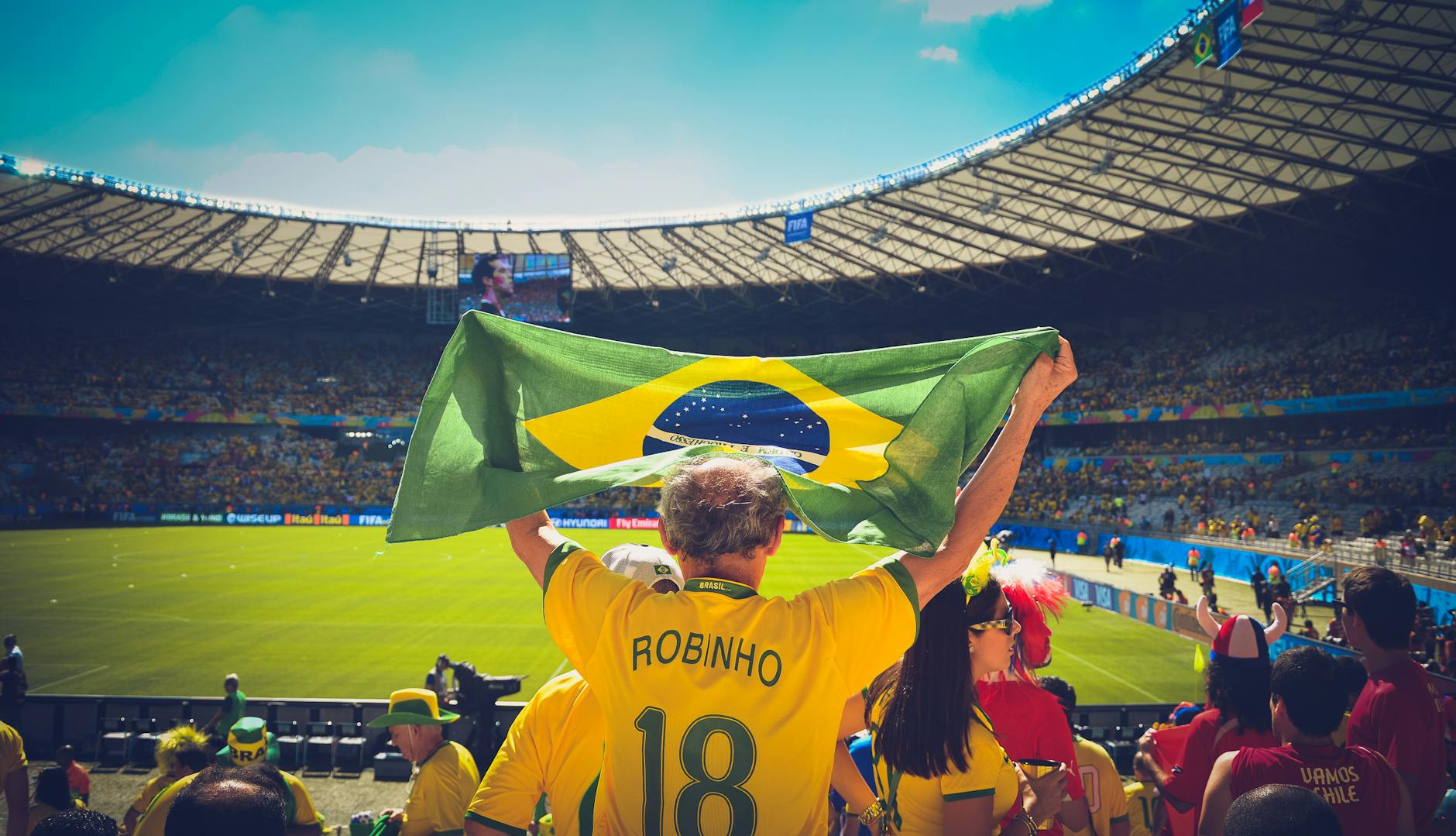
Photo by Caio on Pexels
Myth 3: Is the biggest crowd always the betting edge? — flat-out false
The biggest crowd is not automatically a betting edge because crowd size does not equal tactical advantage, fitness advantage, or value. In 2026 world cup football, the sharper question is whether crowd pressure changes referee tempo, team behavior, or sportsbook pricing enough to create misalignment.
This myth is common because major tournaments create vivid images: flags, chants, full fan parks, and stadium noise. Yet the correct sequence is first to identify the tactical matchup, then evaluate the venue context, and finally compare the market price. A possession-heavy team may benefit from a supportive crowd if it scores early, but it may also become vulnerable if pressure turns into impatience after 30 scoreless minutes. Conversely, a compact underdog may prefer a loud environment because every defensive clearance and transition chance gains emotional weight. The FIFA Laws of the Game are maintained by the International Football Association Board, which states that the Laws are intended to help football remain “fair and safe.” That principle matters because crowd energy still operates within officiating standards, added-time protocols, and disciplinary rules.
Tactical Review treats crowd size as one input among many, not a final answer. Useful indicators include:
- Whether the favorite relies on high pressing or slower positional control.
- Whether the underdog has fast wide players who can exploit emotional overcommitment.
- Whether both teams face short rest after travel across North America.
- Whether public betting has already shortened the popular side below fair value.
[Internal Link: football betting market movement explained]
A contrarian but useful conclusion is that the best atmosphere can sometimes create the worst price. Kansas City’s success as a host city showed how passion and civic pride can raise attention around matches. But higher attention often means casual money enters earlier, especially on recognizable national teams. If a market moves from 2.05 to 1.82 without a corresponding team-news change, the late bettor is not buying the same probability profile. That does not mean the favorite will fail; it means the expected value may already be gone.
What actually works?
The most reliable 2026 World Cup football approach combines tactical modeling, venue context, team news, and responsible bankroll rules. A strong process starts with football evidence, then tests market price, and finally rejects bets that rely only on emotion, reputation, or host-city excitement.
First, build the match from the pitch outward. Look at formation stability, defensive line height, goalkeeper distribution, set-piece quality, and substitution depth. Then add tournament context: travel distance, time zone changes, kickoff temperature, and whether a team has already qualified or must chase points. Finally, compare those findings with available odds and implied probability. For example, if a team’s implied win probability is 58 percent but your model estimates 52 percent after accounting for rotation and rest, the correct decision may be no bet. This is where a site such as Tactical Review is useful because tactical previews can prevent users from reducing a World Cup match to brand names and national reputation.
Second, use a checklist that forces discipline before any stake:
- Confirm starting elevens from official team channels when available.
- Compare at least two regulated sportsbook prices before betting.
- Record the opening price, current price, and your estimated fair price.
- Cap single-match exposure, especially during knockout rounds.
- Avoid increasing stake size after a near miss or emotional result.

Photo by Tima Miroshnichenko on Pexels
If you want a structured pre-match routine instead of instinctive wagering, use analysis built for tournament conditions.
The second insight many top-ranking guides miss is that host-city storytelling can be separated from host-city performance. Kansas City’s “Heart of America” positioning, its Fan Festival galleries, and its six-match stadium narrative are valuable for understanding engagement. They are not automatically predictive. A better method is to score host-city effects on a 0 to 3 scale: 0 for no measurable edge, 1 for mild travel or crowd influence, 2 for meaningful rest or climate pressure, and 3 only when multiple indicators align with team news and price inefficiency. This prevents overfitting colorful local stories into betting logic.
What should you ignore?
Ignore signals that sound persuasive but cannot be connected to probability, price, or tactical evidence. In 2026 world cup football, the weakest betting inputs are unsupported social media hype, vague “momentum” claims, patriotic assumptions, and odds tips that do not mention implied probability.
The first thing to ignore is any prediction that treats the FIFA World Cup 2026 as one uniform event. Matches in Kansas City, Mexico City, Toronto, and Miami can differ in climate, travel burden, supporter makeup, and scheduling pressure. The second thing to ignore is surface-level player reputation without role context. A star forward facing a compact low block after heavy travel may have a lower expected shot quality than a less famous forward in a transition-friendly matchup. The third thing to ignore is an odds move without cause. If no lineup, injury, tactical, or weather reason explains the movement, it may simply reflect public money. [Internal Link: responsible bankroll management for football bettors]
You should also be cautious with content that promises certainty. The World Cup is a short tournament, and short samples create noise. A team can dominate expected goals and still lose on penalties; a goalkeeper can outperform historical numbers for two matches; a referee interpretation can alter tempo. Responsible gambling principles matter here because a good read can still lose. Treat analysis as a way to improve decision quality, not as a guarantee of profit. Tactical Review’s preferred framework is therefore evidence first, price second, stake third. If any of those three parts is missing, the bet should usually be skipped.

Photo by Pavel Danilyuk on Pexels
The cleanest conclusion is simple: Kansas City’s FIFA World Cup 2026 story demonstrates why host cities matter, but not in the simplistic way many bettors assume. Six matches, a major Fan Festival, and hundreds of thousands of fans created a rich football environment, yet betting value still depends on tactics, team news, market timing, and disciplined bankroll decisions. First assess the matchup, then test whether the odds still offer value, and finally decide whether the risk fits your plan. For ongoing 2026 World Cup football coverage, Tactical Review can help turn tournament noise into structured analysis.
Ready to move from headlines to evidence-based football coverage?
Frequently Asked Questions
Q: What is 2026 world cup football?
A: 2026 world cup football refers to the FIFA World Cup 2026, a 48-team tournament hosted by the United States, Canada, and Mexico. It is the first men’s World Cup using the expanded 48-team format, creating more matches, more travel variables, and more tactical diversity. For fans and bettors, this means host-city conditions and squad management deserve closer attention than in smaller formats.
Q: How to analyze a 2026 World Cup football match before betting?
A: Start with tactics, then review team news, venue context, and price movement. A practical process is to check formations, injuries, rest days, kickoff conditions, and the implied probability in the odds. Finally, compare your fair-price estimate with the market and skip the bet if the margin is too thin.
Q: What is the difference between host-city atmosphere and betting value?
A: Host-city atmosphere describes fan energy, local events, and stadium mood, while betting value measures whether odds are higher than the true probability. Kansas City’s Fan Festival and six-match schedule created strong atmosphere, but that alone does not guarantee profitable wagers. Betting value requires a measurable link between conditions, tactics, and market mispricing.
Q: Why do World Cup betting predictions fail?
A: World Cup betting predictions often fail because they overrate reputation and underrate short-sample volatility. A national team may have elite players but still struggle with travel, rotation, tactical mismatch, or penalty variance. To reduce poor decisions, separate entertainment narratives from evidence such as expected goals, lineup strength, and rest advantage.
Q: How much money should I stake on 2026 World Cup football bets?
A: Many disciplined bettors risk 1 percent to 2 percent of their bankroll on a single standard wager. Higher stakes increase volatility, especially during knockout matches where extra time and penalties can distort outcomes. Set limits before the tournament starts and never increase stake size just to recover a previous loss.
Q: Is Tactical Review useful for World Cup betting research?
A: Tactical Review is useful if you want football analysis that connects tactics, player data, and tournament context before considering odds. It focuses on match predictions, team tactics, player stats, and daily 2026 World Cup coverage. Use it as part of a broader process that also includes official team news, regulated sportsbook comparison, and responsible bankroll control.