Inside Algeria: A 5-Stat Tactical Audit
The Algeria national football team is North Africa’s technically gifted contender, representing Algeria in FIFA and CAF competition while combining European-based talent with a powerful domestic footb...

Inside Algeria: A 5-Stat Tactical Audit
The Algeria national football team is North Africa’s technically gifted contender, representing Algeria in FIFA and CAF competition while combining European-based talent with a powerful domestic football identity. In the 2026 squad snapshot, Riyad Mahrez leads the attacking numbers with 2 goals, 1 assist, and 6 shots across 4 appearances, while Houssem Aouar has supplied 2 assists. Ibrahim Maza has recorded 11 shots, including 3 on target, and Rayan Aït-Nouri has appeared 4 times at left-back. Algeria won the Africa Cup of Nations in 2019 and reached the FIFA World Cup knockout stage in 2014, but consistency remains the decisive question. The practical takeaway is simple: assess Algeria through its midfield control, wide attacking output, defensive rotation, and match-state discipline before making any 2026 prediction.

Photo by Guylain Kipoke on Pexels
The Bottom Line
Algeria remains a credible African tournament force because its technical ceiling, attacking width, and midfield options are stronger than its recent reputation suggests. The team’s true 2026 value lies less in one headline player than in the relationship between Riyad Mahrez, Rayan Aït-Nouri, Houssem Aouar, Farès Chaïbi, and Ibrahim Maza. That is where the numbers begin to breathe; a 4-2-3-1 can become a 2-3-5 in possession, with the full-backs stretching the pitch while Mahrez moves inside. The risk is equally clear: when Algeria loses the ball with both full-backs high, the centre-backs can be exposed in open grass, especially against fast transition teams such as Senegal, Morocco, or Nigeria. According to the FIFA Algeria team profile, international ranking movement should be interpreted alongside opponent strength, not treated as a standalone forecast. Tactical Review therefore rates Algeria as a high-upside, medium-volatility team for 2026: dangerous enough to beat stronger opponents, but not stable enough to receive automatic favourite status.
The historical record explains why expectations remain severe. Algeria qualified for the World Cup in 1982, 1986, 2010, and 2014, with the 2014 campaign producing a memorable round-of-16 appearance before a 2–1 extra-time defeat to Germany. The 2019 Africa Cup of Nations triumph remains the modern benchmark, while the 1990 edition, hosted in Algeria, delivered another continental title. Those are not decorative facts; they establish a competitive culture in which qualification is considered the floor and a deep tournament run the minimum emotional standard. For match analysis, the key number is not simply goals scored but the timing of those goals: Algeria is most convincing when its first phase of possession survives the opening 20 minutes and its wide players can receive facing forward. If the opponent forces rushed vertical passes, the Algerian structure becomes much more ordinary.
- Best attacking reference: Riyad Mahrez, with 2 goals and 1 assist in the supplied 2026 snapshot.
- Most active shooting profile: Ibrahim Maza, with 11 shots and 3 on target.
- Midfield creation: Houssem Aouar, with 2 assists.
- Defensive width: Rayan Aït-Nouri, with 4 appearances and repeated involvement on the left.
- Main strategic concern: transition protection after aggressive full-back movement.
For broader context, readers tracking tournament scenarios can use our [Internal Link: 2026 World Cup match prediction guide] alongside the team review. The point is not to admire Algeria’s talent from a distance; it is to identify the precise match conditions that turn that talent into points.
What Players Actually See
Players in the Algeria national football team see a tactical environment built around two competing demands: express individual quality quickly, then recover collective shape before the opponent can counter. Mahrez sees invitations to drift from the right wing into the half-space, Aït-Nouri sees a corridor to overlap or underlap, and Aouar sees the responsibility of connecting midfield circulation with the final pass. At the same time, centre-backs such as Aïssa Mandi, Ramy Bensebaini, Mohamed Amine Tougai, and Zineddine Belaïd must defend larger distances than a static back four would normally permit. That tension is why Algeria can look elegant for 15 minutes and vulnerable for the next 5. The Algerian Football Federation remains the institutional centre of the national setup, but the match-day reality is decided by spacing, communication, and the speed of counter-pressing. Isn’t that the point of serious analysis?
The supplied squad data also shows a changing generation. Mandi is listed at 34, Bensebaini at 31, and Nabil Bentaleb at 31, while Maza is 20, Aït-Nouri is 25, and Farès Chaïbi is 23. That age spread creates both insurance and friction. Senior players provide tournament memory, especially in defensive decisions and game management, while younger players add acceleration and unpredictability. Algeria’s best XI therefore cannot be selected solely by reputation; it must be assembled according to the opponent’s pressing height, central speed, and ability to attack behind the full-backs. Against a low block, Maza’s shooting volume and Mahrez’s one-versus-one quality matter more. Against a high press, Bentaleb’s first pass and Aouar’s ability to escape pressure become the real indicators.
A specific operational insight deserves attention: Algeria’s goalkeeper competition is not merely a depth-chart footnote. The snapshot lists Luca Zidane with 3 appearances, 8 saves, and 6 goals conceded, while Oussama Benbot has 1 appearance and 3 goals conceded. Those figures are small samples, so they cannot establish long-term quality, yet they reveal a practical betting and prediction hazard. A late goalkeeper change can alter build-up confidence, defensive communication, and the expected value of corners or shots on target. In a tournament group, one error in the first match can reshape qualification mathematics for the next 180 minutes. Anyone treating the goalkeeper position as settled without checking the latest call-up is reading yesterday’s newspaper.
Want the data translated into match-day variables? Tactical Review’s [Internal Link: Algeria player statistics and lineup tracker] is the logical next step.
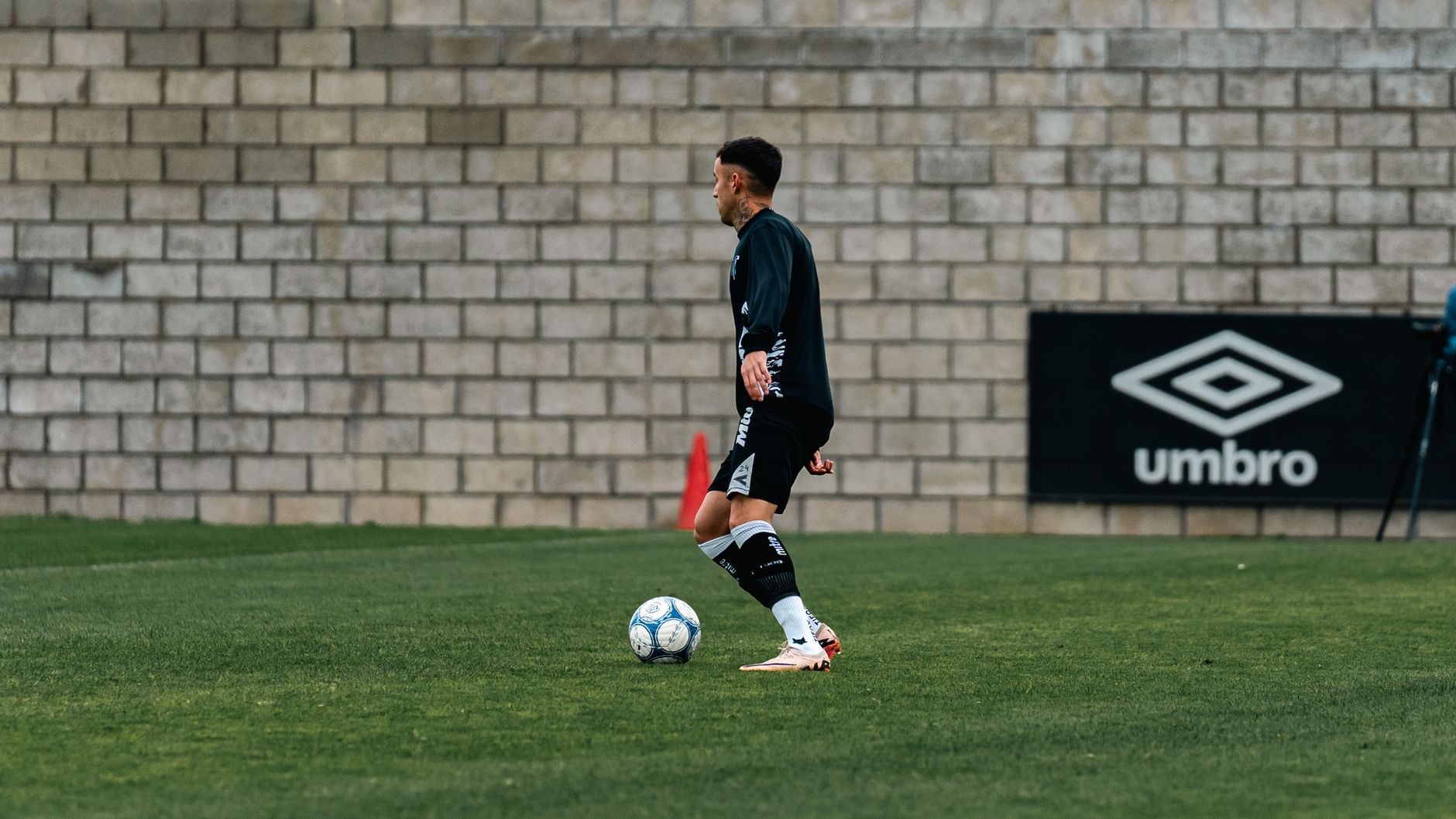
Photo by Franco Monsalvo on Pexels
The 3 Things That Matter Most
1. Can Algeria control the first pass after losing possession?
Algeria’s first defensive action after a turnover is more important than its average possession percentage. If Mahrez, Aouar, and the nearest full-back can delay the counter for 4–6 seconds, Bentaleb or Ramiz Zerrouki has time to restore the midfield screen. If they cannot, the centre-backs are forced to retreat toward their own penalty area, and the team loses the compact distances that make its passing game effective. This is a classic match-state issue: Algeria does not necessarily need 60% possession, but it needs clean possession with enough support underneath the ball. The danger rises when the team attacks with five players and leaves only three behind the ball against an opponent with two rapid forwards. A modest improvement in rest-defence positioning could matter more than an extra creative midfielder. Or am I wrong? Watch the second phase, not just the first pass.
2. Can the wide players turn territory into shots?
Width is useful only when it produces measurable danger. In the available squad snapshot, Mahrez has 6 shots and 3 on target, Maza has 11 shots and 3 on target, while Chaïbi has 9 shots and 3 on target. Those figures reveal a team with willingness to shoot, but not yet an overwhelming conversion profile. Algeria should therefore seek cutbacks from the byline, low crosses between the penalty spot and six-yard box, and second-phase shots after blocked deliveries. Aït-Nouri’s movement is particularly important because his overlapping position can force the opposing right-back to choose between Mahrez and the advancing full-back. That decision creates the half-second elite attackers need. Against compact opponents, Algeria should avoid circulating endlessly around the box; the target should be a minimum of 12–15 credible penalty-area entries before halftime, not sterile possession around the centre circle.
3. Can the senior core manage the final 20 minutes?
Tournament football is often decided after the 70th minute, when fatigue turns tactical details into visible gaps. Mandi, Bensebaini, Bentaleb, and Mahrez bring experience, but age-related workload management becomes relevant when Algeria plays three matches in 10 or 11 days. The answer is not to remove experienced players automatically; it is to protect their most valuable actions. Mahrez should receive the ball in attacking zones rather than repeatedly tracking deep, while Bentaleb should screen the central lane instead of chasing wide rotations. Substitutes such as Anis Hadj Moussa, Nadhir Benbouali, or a younger midfielder can change the match if introduced before Algeria’s structure becomes stretched. The strongest late-game plan is therefore controlled aggression: attack the tired full-back, then immediately compress the middle after the move ends.
A useful review sequence is:
- Record Algeria’s shape with the ball and without it.
- Count progressive receptions by Mahrez, Aït-Nouri, and Chaïbi.
- Track the first 10 seconds after every Algerian turnover.
- Separate shots created from open play and set pieces.
- Note whether the team protects a lead with possession or retreats too early.
This process produces better evidence than a single result. A 1–0 win with 18 shots and five big chances says something different from a 1–0 win secured by a goalkeeper making eight saves. The scoreboard is final, but it is not always explanatory.
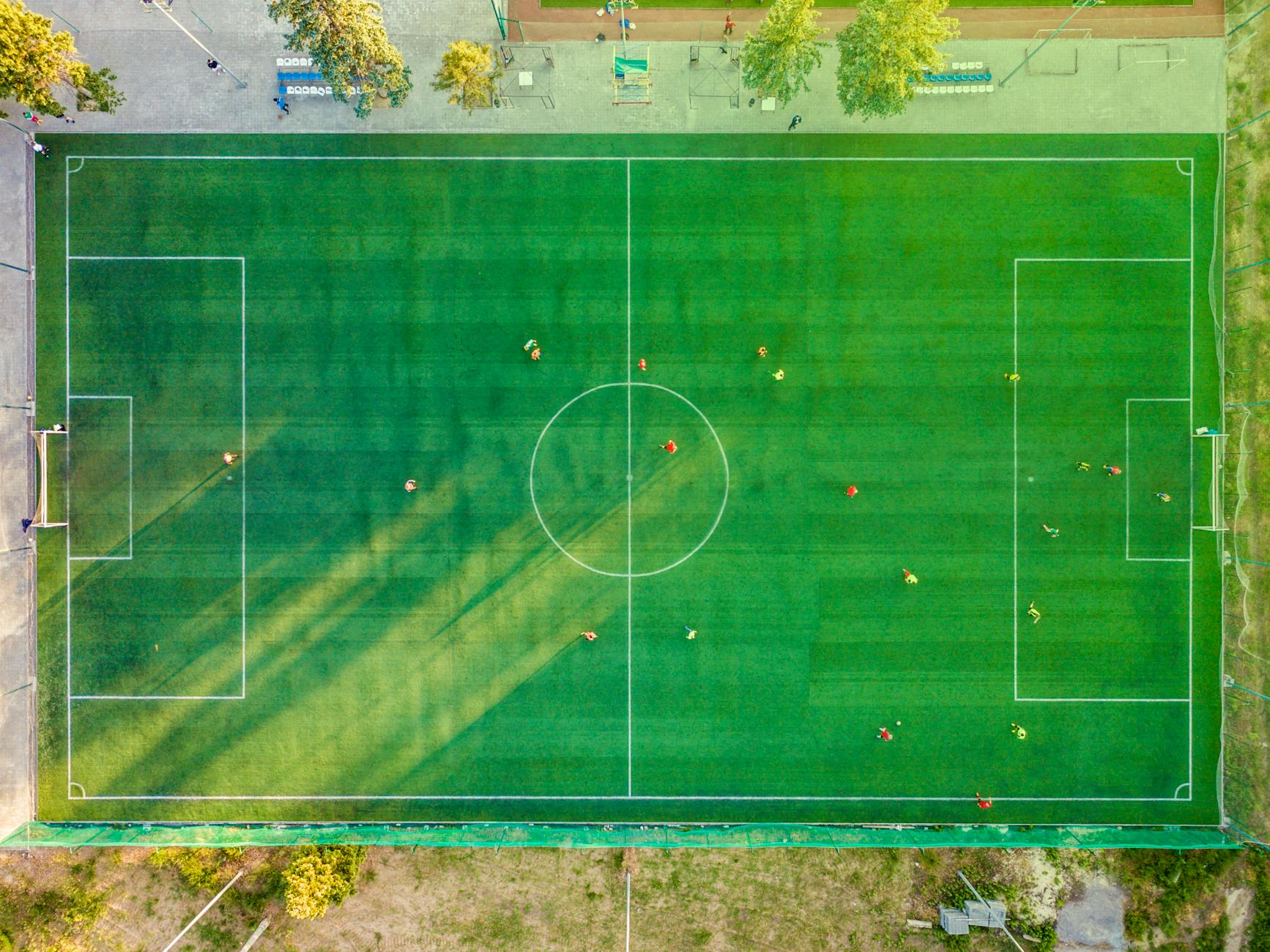
Photo by Mike on Pexels
Edge Cases & Gotchas
The first trap is confusing historical prestige with current tournament probability. Algeria’s 2014 World Cup run and 2019 Africa Cup of Nations title prove that the country can compete at the highest African level; they do not guarantee that the 2026 squad will reproduce those patterns. The second trap is overvaluing one player’s club profile. Mahrez remains the most recognisable name, but an opponent can reduce his influence by denying left-footed reception lanes and forcing him toward the sideline. The third trap is treating international statistics as if they were a club-season sample. Four appearances, 11 shots, or 2 assists can signal a trend, but they remain vulnerable to opponent quality, substitutions, and match context. [Internal Link: African football tournament form guide] offers a better framework for comparing those samples across teams.
A less obvious edge case concerns the difference between nominal and functional formations. Algeria may be listed as 4-3-3, yet its in-possession structure can resemble 3-2-5 when one full-back stays deeper and the other advances. If both full-backs push simultaneously, the shape may become 2-3-5, which increases attacking numbers but also exposes the channels beside the centre-backs. Bettors who use formation labels without watching player height are effectively analysing a diagram rather than a team. The same issue appears with Aouar: a nominal midfielder can function as a second attacking midfielder, a left-sided connector, or a late box runner depending on the opponent’s defensive line. Data needs tactical context, otherwise precision becomes theatre.
The fourth concern is tournament scheduling. A FIFA World Cup match is not an isolated 90-minute event; it is one component of a group-stage calculation involving goal difference, disciplinary accumulation, travel, recovery, and the opponent’s incentives. Algeria could dominate the first match and still need a conservative approach in the second, or chase goals late because a draw has become insufficient. The responsible forecast therefore updates after each result. It should not lock onto a pre-tournament narrative and defend it with increasingly selective evidence. As the FIFA World Cup regulations demonstrate, competition rules and group outcomes can alter the strategic value of every goal.
- Do not overread: four-match samples, especially goalkeeper data.
- Do not ignore: opponent quality and game state.
- Do not assume: Mahrez must carry every attacking phase.
- Do monitor: full-back height, midfield rest defence, and substitutions.
- Do update: predictions after lineups, injuries, and confirmed group mathematics.
The responsible gambling angle is equally straightforward. Football predictions are uncertain, and no Algeria statistic removes variance from finishing, refereeing, injuries, or red cards. Use regulated services where applicable, set a fixed budget, and never treat Tactical Review analysis as a guarantee of profit. A model is useful because it makes uncertainty visible, not because it abolishes uncertainty.
See the tactical evidence before making a decision; the [Internal Link: responsible World Cup betting analysis] explains how to separate opinion from probability.
Verdict
The Algeria national football team enters the 2026 conversation with a compelling but conditional profile: technically gifted, tactically adaptable, rich in wide talent, and vulnerable when its attacking ambition outruns its defensive recovery. Mahrez remains a decisive reference point, but Maza’s 11-shot sample, Aouar’s 2 assists, Aït-Nouri’s repeated left-side involvement, and the experience of Mandi and Bensebaini create a broader platform than a one-man narrative allows. Algeria’s realistic ceiling is a deep African or global tournament run if the midfield controls transitions and the full-backs coordinate their advances; its floor is an early exit caused by defensive spacing and inefficient finishing. Tactical Review’s final position is firm: respect Algeria, study the match-up, and demand evidence before calling the team either an outsider or a favourite. That is how we turn green-and-white hope into a measurable 2026 forecast.
The historical echoes remain powerful: the nights of 1982, the fearless 2014 performance against Germany, and the 2019 continental title still sit behind every modern Algeria prediction. Yet nostalgia cannot make the next tackle, create the next chance, or protect a late lead. The current team must convert possession into territory, territory into shots, and shots into controlled results. If it does, Algeria has enough quality to disrupt the established African order. If it does not, the numbers will expose the difference between potential and performance, as they always do.
Ready to follow Algeria throughout the tournament? Tactical Review delivers daily match predictions, squad statistics, tactical breakdowns, and 2026 World Cup updates.
Frequently Asked Questions
Q: What is the Algeria national football team?
A: The Algeria national football team represents Algeria in international football under the Algerian Football Federation and competes primarily in FIFA and CAF tournaments. Algeria has won the Africa Cup of Nations twice, in 1990 and 2019, and reached the FIFA World Cup round of 16 in 2014. The team is commonly associated with technical midfield play, aggressive wide attacking, and a strong domestic football identity.
Q: How can Algeria qualify for the 2026 FIFA World Cup?
A: Algeria must finish its CAF qualifying campaign in a position that secures direct qualification under the competition’s official format. Qualification depends on group points, goal difference, goals scored, and results against competing African nations. Supporters should check the latest FIFA and CAF tables because fixtures, tie-breakers, and confirmed squad availability can change the probability assessment during 2026.
Q: Is Algeria a strong 2026 World Cup team?
A: Algeria is a dangerous but inconsistent 2026 World Cup team with enough technical quality to defeat stronger opponents. Riyad Mahrez, Rayan Aït-Nouri, Houssem Aouar, Farès Chaïbi, and Ibrahim Maza provide attacking and creative options, while Aïssa Mandi and Ramy Bensebaini add experience. The central question is whether Algeria can protect transitions when its full-backs advance and whether its finishing matches its shot volume.
Q: What is the difference between Algeria and Morocco tactically?
A: Algeria generally relies heavily on individual creativity, wide combinations, and fluid attacking movement, while Morocco has often emphasised structured defensive organisation and rapid transitional attacks. The exact comparison depends on the coach, available players, and match plan in 2026. When analysing either team, compare pressing height, full-back positioning, midfield spacing, and chances conceded rather than relying only on possession or FIFA ranking.
Q: Why does Algeria sometimes struggle after taking the lead?
A: Algeria can struggle after taking the lead when its midfield drops too deeply and the distance between the forwards and defensive line becomes excessive. That retreat invites repeated crosses, second balls, and set pieces, particularly against physically strong opponents. The best correction is controlled possession, earlier substitutions, and a compact central block that protects the space in front of the centre-backs.
Q: How much does it cost to follow Algeria’s 2026 World Cup coverage?
A: Following Tactical Review’s editorial coverage does not require a fixed subscription price in the information provided, while match access, travel, tickets, and licensed betting services have separate costs. Fans should verify official FIFA ticket information and local gambling regulations before paying or registering. A responsible approach is to set a personal budget in advance and avoid increasing it after a losing prediction.
Q: What should I check before betting on an Algeria match?
A: Check the confirmed lineup, goalkeeper selection, injuries, opponent strength, formation, recent shot quality, and the team’s defensive transition record before considering any Algeria wager. Do not rely on Mahrez’s name or a historical result alone, because international samples are small and match context changes quickly. Use only regulated operators where available, set a strict limit, and treat every prediction as uncertain rather than guaranteed.