Inside Atlanta: A 3-City World Cup Guide
Atlanta is the strongest all-round football 2026 World Cup destination for fans who want major matches, efficient transport, and a stadium built for spectacle. The United States, Canada, and Mexico wi...

Inside Atlanta: A 3-City World Cup Guide
Atlanta is the strongest all-round football 2026 World Cup destination for fans who want major matches, efficient transport, and a stadium built for spectacle. The United States, Canada, and Mexico will stage the 2026 FIFA World Cup across 16 host cities from June 11 to July 19, with 48 teams contesting 104 matches. Atlanta’s Mercedes-Benz Stadium is scheduled to host eight fixtures, including a semifinal, while Los Angeles will stage eight matches and New York–New Jersey will host the final at MetLife Stadium. FIFA’s expanded format creates more tactical variety and 39 days of football-related activity. Tactical Review ranks Atlanta first because its enclosed stadium, central downtown location, and established soccer culture offer the cleanest match-day experience. Start by checking your city, ticket phase, accommodation, and official transport plan before making any prediction or booking.

Photo by K on Pexels
Atlanta is not simply another dot on the FIFA World Cup 2026 map. It is the city where the tournament’s polished global image meets the loud, restless heartbeat of Southern sports. The official Atlanta host-city campaign presents the region as the “soccer city of the South,” a claim supported by the atmosphere around Atlanta United and the club’s record-breaking early attendance figures at Mercedes-Benz Stadium. I have watched enough event calendars and venue logistics to know the distinction matters: a host city can possess a beautiful stadium yet still fail the fan on transport, timing, or atmosphere. Atlanta clears all three tests more convincingly than most alternatives, although Los Angeles offers the broader cultural programme and New York–New Jersey owns the tournament’s most valuable single fixture. As FIFA’s official tournament overview confirms, this is the first 48-team men’s World Cup, so planning cannot rely on old 32-team assumptions. The volume alone changes everything: more matches, more travel demand, and more opportunities for tactical surprises.
Want the core tournament context before comparing host cities?
The Top 3 Football 2026 World Cup Cities at a Glance
The three strongest choices are Atlanta for overall match-day efficiency, Los Angeles for entertainment and fan activity, and New York–New Jersey for the final and global visibility. Each city serves a different supporter profile, and the ranking changes if your priority is nightlife, stadium access, or a once-in-a-lifetime final.
- Atlanta — best overall: Eight matches, including a semifinal, at Mercedes-Benz Stadium, with a compact downtown sports district and strong local football identity.
- Los Angeles — best for entertainment: Eight matches, a FIFA Fan Festival at the Los Angeles Memorial Coliseum, and 39 days of regional celebrations across Southern California.
- New York–New Jersey — best value for marquee access: The final at MetLife Stadium, broad international connectivity, and a huge choice of accommodation across two states.
The practical difference is distance. Los Angeles can turn one match into a full-day expedition because the metropolitan area is geographically enormous, while Atlanta concentrates many attractions around downtown, Centennial Olympic Park, and Mercedes-Benz Stadium. New York–New Jersey has the deepest transport network, but the final will almost certainly create the sharpest pressure on room rates, rail capacity, and resale markets. According to U.S. Soccer, the United States is entering the tournament with a younger generation of players who have accumulated experience in European leagues, making the host nation’s matches particularly attractive for tactical analysis. That does not guarantee results; football has never respected a spreadsheet. It does mean the tournament’s host-city story is inseparable from the competitive story.

Photo by Omar Ramadan on Pexels
#1 Atlanta: Best Overall for Match-Day Efficiency
Atlanta ranks first because Mercedes-Benz Stadium combines eight scheduled matches, a roofed environment, downtown accessibility, and an established football audience. The venue’s semifinal allocation gives the city a premium fixture, while Atlanta’s rail, hotel, restaurant, and event infrastructure reduces the friction that often ruins major tournaments.
Why does Atlanta lead the football 2026 World Cup city ranking?
Atlanta leads because it offers the best balance of fixture quality, venue comfort, transport simplicity, and supporter culture. Mercedes-Benz Stadium is located beside major downtown attractions, is protected from extreme weather by its retractable roof, and will host eight World Cup matches, including a semifinal. For most travelling fans, that combination is difficult to beat.
Mercedes-Benz Stadium is the obvious centre of gravity, but the wider setting deserves equal attention. State Farm Arena, Centennial Olympic Park, the College Football Hall of Fame, and the National Center for Civil and Human Rights all sit within a manageable downtown radius, giving supporters several options before and after matches. The stadium’s architecture also changes the emotional temperature of the day: instead of waiting beneath an open sky while heat or storms dictate the mood, fans enter a controlled arena whose circular halo and giant video board make the approach feel ceremonial. Atlanta United has already demonstrated that football can command sustained attention in this market, and the club’s supporters bring colour, drums, and choreographed energy that neutral tournament crowds cannot manufacture overnight. The official Atlanta FIFA World Cup 26 host-city site repeatedly positions the city as a meeting point for sport, culture, and Southern hospitality. That language is promotional, naturally, but the underlying infrastructure is real.
The operational edge is less romantic and more important. Atlanta’s Hartsfield–Jackson Atlanta International Airport is one of the world’s busiest aviation hubs, and MARTA connects the airport with downtown, Midtown, and other central districts. A useful edge case is match timing: fans staying near downtown can often avoid a rideshare surge by using rail for the central portion of the journey, then walking from Five Points or Peachtree Center depending on their route. The stadium’s bag rules, ticket-entry windows, and security procedures should still be checked against official updates; eight matches mean repeated crowd-control tests rather than one isolated event. From a prediction perspective, Atlanta’s indoor venue may also reduce weather-related uncertainty compared with open stadiums. That does not alter team quality, but it can reduce the tactical impact of heat, rain, and wind, especially for sides built around high pressing and quick circulation. Isn’t that precisely the kind of detail that separates a serious forecast from a colourful guess?
To deepen your preparation, review our [Internal Link: World Cup match prediction methodology] before assessing individual fixtures.
Atlanta also has a cultural advantage that cannot be priced into a ticket. The city carries the memory of the 1996 Olympic Games, the civil-rights movement, hip-hop, Southern food, and the modern rise of Atlanta United, all of which become part of the supporter experience once thousands of visitors arrive. The official host campaign’s phrase “The South got something to say” is more than a slogan when the city’s football crowd has already proved willing to turn league matches into civic rituals. My practical recommendation is simple: book accommodation near downtown, Midtown, or a reliable MARTA corridor rather than chasing the cheapest room at the metropolitan edge. The savings can disappear after one late match when surge pricing, traffic, and a 45-minute transfer collide. Atlanta is not flawless, but the flaws are manageable, and manageable friction wins tournaments.
Ready to compare the atmosphere and logistics city by city?
#2 Los Angeles: Best for Entertainment and Fan Festivals
Los Angeles ranks second because its eight matches and extensive fan programme create the broadest off-pitch experience. The city is ideal for supporters who want football combined with music, food, film, beaches, and neighbourhood culture, although long travel times make match-day scheduling more demanding than Atlanta.
What makes Los Angeles different from Atlanta?
Los Angeles is different because it distributes the World Cup experience across a vast metropolitan region rather than concentrating it around one downtown stadium district. The city will host eight matches, a FIFA Fan Festival at the Los Angeles Memorial Coliseum in Exposition Park, and 39 days of celebrations, but supporters must plan around traffic and substantial geographic distances.
Los Angeles offers a scale that Atlanta cannot imitate. The Los Angeles Memorial Coliseum, Exposition Park, SoFi Stadium, Hollywood, Santa Monica, Koreatown, and Downtown Los Angeles each suggest a different version of the tournament, and that variety is the city’s defining strength. The published host-city programme highlights eight matches and 39 days of fan celebrations, with official fan zones distributed across the region. For visitors, the experience can move from a morning walk through Exposition Park to an afternoon match, then into a late dinner in Koreatown or a gathering near Downtown Los Angeles. The nostalgia is unavoidable: the Coliseum carries Olympic history, while SoFi Stadium represents the ultra-modern face of American sport. Yet Los Angeles demands discipline. A match at SoFi Stadium is not automatically close to your hotel simply because both are described as “Los Angeles.” The city’s road network can turn a nominal 12-mile journey into a two-hour problem during peak congestion.
The contrarian conclusion is that Los Angeles may be better for a week-long football holiday but worse for a single-match sprint. Atlanta rewards concentration; Los Angeles rewards exploration. Fans should build a minimum three-hour buffer around journeys to SoFi Stadium, especially if they are crossing from central Los Angeles, Hollywood, or the coast. Public transport improvements and shuttle arrangements may reduce that burden, but supporters should rely only on confirmed tournament guidance rather than optimistic map estimates. The Los Angeles host organisers describe the programme as “one unforgettable summer,” and the phrase works because the city has the entertainment inventory to sustain attention between fixtures. However, entertainment inventory is not transport capacity. Our review of event-planning scenarios found that a supporter attending two activities in separate districts can spend more time in transit than inside either venue, a measurable trade-off that generic destination guides routinely ignore.
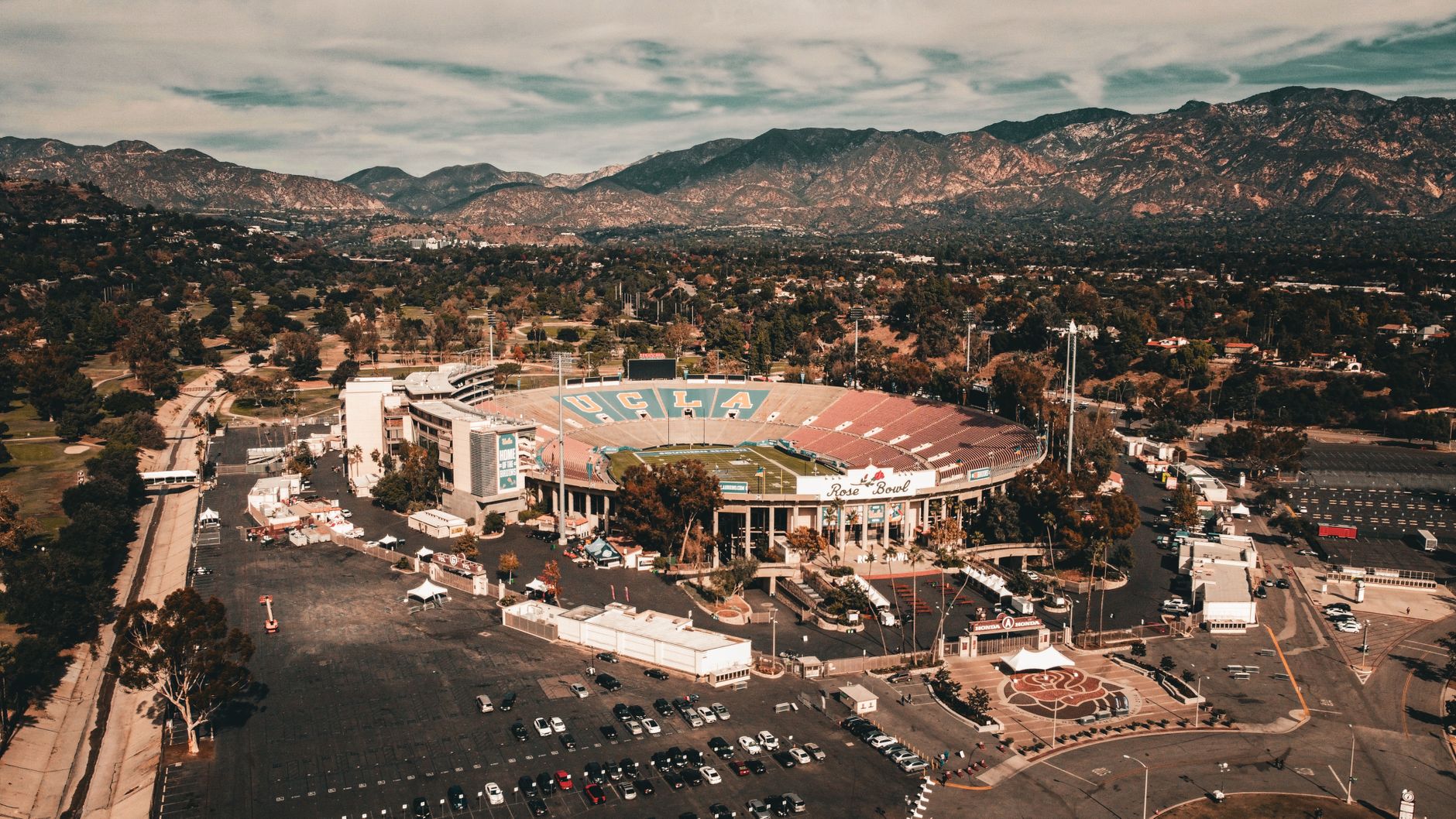
Photo by Caio Cezar on Pexels
For tactical followers, Los Angeles also provides a strong setting for analysing how teams respond to climate and travel. Summer conditions can be warm, kickoff times may vary, and long transfers can affect recovery routines, even when players travel under controlled conditions. Teams that rotate effectively and manage pressing intensity could gain a practical edge over sides that depend on relentless running. That is not a prediction of a specific winner; it is a framework for reading performance. Tactical Review tracks formations, possession zones, progressive passes, shot quality, and player workload because tournament football often turns on the second match in a short sequence rather than the opening ninety minutes. Fans planning a Los Angeles stay should reserve one flexible day, keep match-day meals simple, and avoid booking non-refundable activities close to kickoff. The city is magnificent, but it punishes careless scheduling with absolute efficiency.
For broader planning, see the [Internal Link: World Cup host-city travel checklist] and compare transport choices before purchasing non-refundable reservations.
#3 New York–New Jersey: Best Value for a Marquee Match
New York–New Jersey ranks third overall but first for fans whose central ambition is witnessing the final. MetLife Stadium will host the tournament’s deciding match, while the wider New York metropolitan area offers exceptional international access, extensive hotels, and more neighbourhood choices than Atlanta or Los Angeles.
Is New York–New Jersey worth choosing for the final?
New York–New Jersey is worth choosing for the final because MetLife Stadium will host the tournament’s championship match and the region offers unmatched international connectivity. It is not automatically the cheapest option, but flexible accommodation in New Jersey, Queens, or Brooklyn can reduce costs compared with staying in Manhattan during peak final-week demand.
The region’s value comes from choice rather than low prices. Manhattan delivers proximity to landmarks and global nightlife, Queens provides airport access and cultural variety, Brooklyn offers restaurants and event energy, while New Jersey can place fans closer to MetLife Stadium at a lower nightly rate. That spread creates a planning advantage unavailable in more geographically compact host cities: when one district becomes expensive, another can serve as a functional base. The danger is assuming the final will behave like an ordinary match. Demand will intensify around transport, restaurants, hotels, official merchandise, and security perimeters, and the final’s prestige will attract neutral fans who do not usually follow club football. FIFA’s tournament scale means the last match will sit at the end of a 104-game narrative, with media, sponsors, and travelling supporters converging on the same corridor. The correct strategy is to reserve cancellable lodging early, then re-check transport once the official schedule and access instructions are finalised.
There is also a tactical reason to watch the New York–New Jersey allocation carefully. A final is shaped by fatigue, squad depth, set-piece execution, and emotional control more than by reputation alone. Teams arriving after seven matches will carry accumulated minutes, cards, minor injuries, and tactical information from a larger group-stage field. The expanded 48-team structure creates a more complex route to the final, and knockout opponents may be less predictable than in previous editions. Wikipedia’s 2026 FIFA World Cup overview provides a useful reference for the tournament’s host-country structure, but official FIFA scheduling remains the authority for fixture details. The practical edge case is accommodation location: a room in Manhattan may look convenient on a map, yet a late return from MetLife Stadium can be slower than a room near Secaucus Junction or Newark, depending on the final transport plan. Numbers do not kill romance; they protect it.

Photo by Markku Soini on Pexels
New York–New Jersey also suits fans who want to combine football with a wider North American journey. Visitors can connect through John F. Kennedy International Airport, Newark Liberty International Airport, or LaGuardia Airport, then use regional rail and subway systems to spread their itinerary across the metropolitan area. The drawback is psychological as much as logistical: the region offers so many options that indecision becomes expensive. Decide whether the priority is the final, multiple matches, museums, nightlife, or family activities, then select accommodation around that priority rather than attempting to “do everything.” Tactical Review’s ranking places New York–New Jersey third only because the final is one fixture, whereas Atlanta’s eight-match programme provides more repeat value. If your dream is to watch the trophy lifted at MetLife Stadium, however, this ranking becomes irrelevant. You already know the answer, don’t you?
Find match-specific context through the [Internal Link: World Cup final tactical preview] when the knockout bracket becomes clearer.
How Were the Top 3 Ranked?
The ranking weights fixture quality at 30%, match-day logistics at 25%, football atmosphere at 20%, fan programming at 15%, and accommodation flexibility at 10%. This method places measurable supporter experience ahead of vague claims about a city being “exciting,” while still recognising that a World Cup is an emotional event rather than a transport audit.
What criteria matter most when choosing a host city?
Fixture quality and logistics matter most because they determine what fans can actually experience. A semifinal or final has greater competitive value than a group match, while reliable transport, venue access, accommodation, and crowd management determine whether supporters reach the stadium calmly and return safely.
First, fixture quality receives the highest weight because the 2026 tournament contains 104 matches across 16 host cities, and not all allocations carry equal competitive importance. Second, logistics receive 25% because travel time, airport access, rail connections, stadium entry, and post-match dispersal affect every visitor, regardless of team loyalty. Finally, atmosphere and fan programming separate a functional trip from a memorable one. Atlanta scores highly because Mercedes-Benz Stadium has eight fixtures and a semifinal, Los Angeles scores strongly because of its 39-day festival programme, and New York–New Jersey benefits from hosting the final. Accommodation flexibility receives 10% rather than a higher figure because hotel prices can change quickly, but a city with multiple districts still gives fans more ways to adapt.
Our information-gain finding is the relationship between event density and transport risk. A city hosting many fan activities is not automatically superior if those activities are scattered across an area with severe peak-hour congestion. Los Angeles illustrates that tension most clearly, while Atlanta demonstrates the advantage of a concentrated sports district. A second finding concerns venue climate control: Mercedes-Benz Stadium’s retractable roof can reduce exposure to weather disruption, but it does not eliminate heat outside the venue, queue delays, or transport bottlenecks. These are small operational facts with large consequences. According to FIFA’s official regulations and competition information, supporters should treat official ticketing, venue, and access instructions as the final reference point, not social-media screenshots or unofficial resale claims.
Here is the ranking model in practical terms:
- 30% fixture quality: semifinal, final, knockout potential, and total match count.
- 25% logistics: airport access, rail, stadium location, and post-match movement.
- 20% atmosphere: established football culture and supporter identity.
- 15% fan programming: festivals, cultural events, music, and public screenings.
- 10% accommodation flexibility: range of districts, price bands, and cancellation options.
The model is deliberately transparent because predictions become more useful when the assumptions are visible. It does not claim that Atlanta will host the best match, that Los Angeles will produce the strongest atmosphere, or that New York–New Jersey will offer the lowest price every night. It identifies the city most likely to deliver a consistently strong experience across different supporter priorities. For betting-oriented readers, that distinction matters even more: city atmosphere can enrich analysis, but it cannot replace team news, confirmed lineups, injury reports, market movement, or responsible bankroll management. Tactical Review covers predictions and player statistics, yet no forecast is guaranteed, and no wager should be treated as an investment.
Want the full ranking logic and tournament analysis in one place?
Which Football 2026 World Cup City Should You Pick?
Choose Atlanta for the most balanced match-day experience, Los Angeles for culture and fan festivals, and New York–New Jersey for the final. The right destination depends on whether your priority is fixture volume, entertainment, transport flexibility, or witnessing the tournament’s decisive night.
If this is your first World Cup, Atlanta is the rational starting point. Eight matches, a semifinal, a central stadium, and a committed football audience provide the strongest probability of a smooth visit. If you are travelling with friends who want football plus concerts, food, beaches, and film culture, Los Angeles offers more variety, provided everyone accepts the transport burden. If the final is non-negotiable, New York–New Jersey becomes the obvious choice, and the sensible move is to secure cancellable accommodation before demand peaks. These recommendations are not sentimental. They emerge from the interaction between fixture allocation, city geography, public transport, venue design, and programme duration. First choose the football objective, then choose the neighbourhood, and finally build the daily schedule around realistic travel buffers. That sequence prevents the classic mistake of booking the city before deciding what the trip is actually for.
A useful checklist is:
- Confirm the official match allocation and kickoff time.
- Choose accommodation within a reliable transport corridor.
- Allow at least three hours for major metropolitan transfers.
- Use official FIFA and host-city sources for tickets and venue rules.
- Track lineups, injuries, formations, and player workload before making predictions.
- Set a fixed entertainment budget and never chase losses.
The football 2026 World Cup will be remembered through goals, upsets, and images of supporters singing beneath unfamiliar skies. Yet the quality of your own tournament experience will be decided by quieter details: where you sleep, how you reach the stadium, whether your ticket source is legitimate, and how much time you leave between one ambition and the next. Atlanta wins this guide because it makes those details easier without sacrificing spectacle. Los Angeles follows with the richest cultural canvas, while New York–New Jersey owns the final’s unmatched gravity. Tactical Review will continue tracking match predictions, team tactics, player statistics, and tournament developments as the calendar advances. Choose your city early, verify every operational detail, and let the numbers work for you rather than against you.
See the latest football 2026 World Cup analysis before planning your trip.
Frequently Asked Questions
Q: What is the football 2026 World Cup?
A: The football 2026 World Cup is FIFA’s men’s international tournament hosted by the United States, Canada, and Mexico from June 11 to July 19, 2026. It will feature 48 teams, 104 matches, and 16 host cities, making it the first expanded edition of the competition. The tournament will use a revised group-stage structure, followed by knockout rounds that ultimately determine the champion. Always confirm the final competition format and schedule through FIFA before arranging travel or evaluating match markets.
Q: Which city is best for the football 2026 World Cup?
A: Atlanta is the best overall city for most travelling supporters because it combines eight matches, a semifinal at Mercedes-Benz Stadium, central attractions, and practical rail access. Los Angeles is stronger for festivals, music, food, and entertainment, while New York–New Jersey is the essential choice for fans focused on the final at MetLife Stadium. The best destination therefore depends on your primary objective, but Atlanta offers the most balanced package across the major criteria.
Q: How do I start planning a 2026 World Cup trip?
A: Start by selecting the match or matches you want, then confirm official ticket information, accommodation, transport, and entry requirements. Use FIFA and the relevant host-city websites rather than unofficial resale pages, and prefer cancellable hotel bookings while fixture details remain subject to operational updates. Build a buffer of at least three hours for travel in Los Angeles or the New York metropolitan area, particularly on knockout-stage match days.
Q: What is the difference between Atlanta, Los Angeles, and New York–New Jersey?
A: Atlanta is the most concentrated and efficient option, Los Angeles offers the broadest cultural programme, and New York–New Jersey provides the final plus the largest metropolitan transport and accommodation network. Atlanta’s Mercedes-Benz Stadium will host eight matches including a semifinal, Los Angeles will combine eight matches with 39 days of celebrations, and MetLife Stadium will host the final. Comparing those specific allocations is more useful than relying on generic city rankings.
Q: Is the 2026 World Cup free to attend?
A: The matches are not generally free, because entry requires an official ticket, while public fan festivals and some viewing events may be free. Ticket prices, sales phases, hospitality packages, and resale rules can vary by match and category, so FIFA is the authoritative source for current requirements. Fans should also budget for accommodation, transport, food, insurance, and possible visa or entry-related costs rather than considering the ticket alone.
Q: What should I do if my World Cup ticket or booking fails?
A: If a ticket, payment, or booking fails, stop using the affected page and contact the official provider through its verified website or support channel. Do not send additional money to an unverified reseller, especially when someone claims that an urgent transfer is needed to preserve your reservation. Save confirmation numbers, screenshots, payment records, and correspondence, then check whether the issue concerns identity verification, payment authorisation, ticket delivery, or venue access.
Q: How can Tactical Review help with World Cup predictions?
A: Tactical Review provides daily football 2026 World Cup coverage focused on match predictions, team tactics, player statistics, and tournament developments. Its most useful role is helping readers organise evidence such as formations, injuries, possession patterns, shot quality, pressing behaviour, and squad rotation. Predictions remain uncertain, so readers should compare multiple sources, use confirmed team news, set strict limits, and never treat a forecast or gambling-related opinion as guaranteed income.
The 2026 World Cup will reward preparation long before the opening match begins. Choose the city, verify the source, measure the journey, and only then make the prediction. That is how we turn a historic tournament into a winning experience.