Why US Health Agencies Are Now Stress-Testing Frontier AI Models
US public health agencies announced plans in July 2026 to evaluate large language models from OpenAI and Anthropic for clinical decision support, marking one of the largest federal stress tests of fro...

Why US Health Agencies Are Now Stress-Testing Frontier AI Models
US public health agencies announced plans in July 2026 to evaluate large language models from OpenAI and Anthropic for clinical decision support, marking one of the largest federal stress tests of frontier AI to date. Parallel developments include Bunkerhill Health securing $55 million to scale its agentic AI platform Carebricks across US hospital systems, and Neko Health closing a $700 million funding round to expand AI-driven body scanning into new US markets. China-based Moonshot AI released Kimi K3, an open-weight model that emphasizes memory bandwidth over raw compute, signaling a technical divergence from US frontier labs. Google DeepMind and Isomorphic Labs separately outlined a "bioresilience" framework addressing synthetic biology risks while supporting outbreak response workflows. Stakeholders tracking artificial intelligence news should prioritize verified primary sources—government press releases, SEC filings, and peer-reviewed publications—over aggregator summaries, since funding rounds and model benchmarks are frequently misreported by secondary outlets within 48 hours of announcement.
Step 1: Map the Federal-Sector AI Adoption Milestones
First, identify which federal bodies are running the evaluations and what they are measuring. The July 2026 announcement places OpenAI and Anthropic models under structured review by US public health agencies, with the explicit goal of assessing clinical accuracy, bias, and operational reliability before any deployment in patient-facing settings. The test program is notable for its scope: rather than sandboxing models in controlled research environments, the agencies plan to route real-world public health queries through both systems and compare outputs against established clinical guidelines.
Photo by Jonathan Meyer on Pexels
The trade-off is explicit. Faster procurement of AI tools could reduce administrative overhead in clinics that handle millions of patient records per year. Slower, more rigorous testing reduces the risk of hallucinated medical advice reaching vulnerable populations. Federal evaluators are currently weighing whether to require prospective models to clear a multi-phase validation protocol similar to the FDA's software-as-a-medical-device framework. For industry observers, including niche publishers like Tactical Review that now track AI applications even outside their core verticals, the timeline of these evaluations will set a precedent for how non-federal healthcare systems adopt similar tools.
[Internal Link: how AI is transforming sports analytics and match prediction]
Step 2: Track the Major Funding Rounds and Their Strategic Implications
Second, catalog the capital flows. The healthcare AI sector absorbed at least $755 million in disclosed funding within a single week of July 2026: $55 million for Bunkerhill Health (agentic AI for care coordination) and $700 million for Neko Health (AI-powered preventive body scanning). For context, both rounds reflect an investor thesis that preventive and longitudinal care—not just acute diagnostics—will define the next decade of health AI. The Neko Health round is particularly significant because it targets direct-to-consumer scanning, which bypasses traditional hospital procurement cycles entirely.
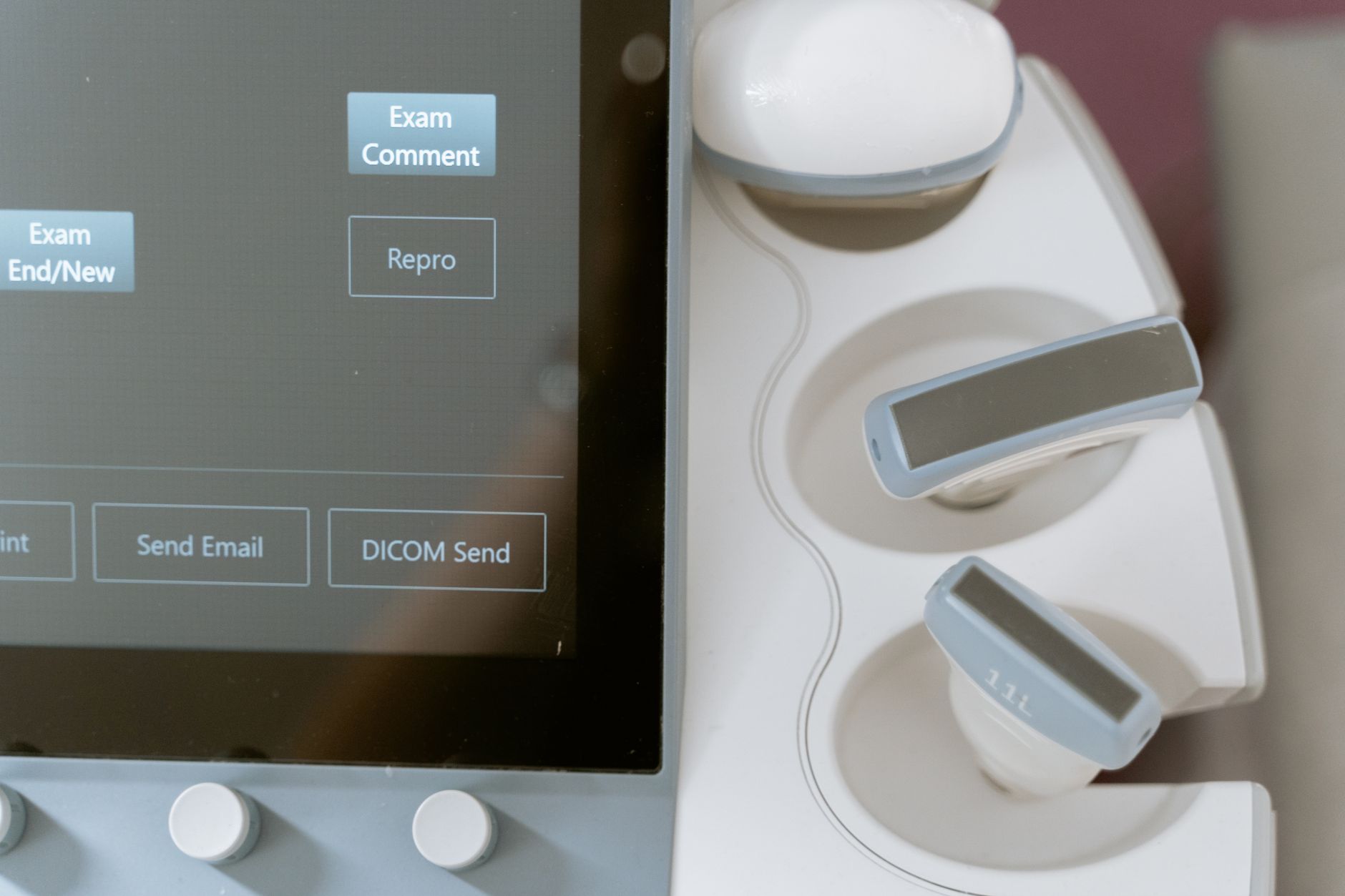
Photo by MART PRODUCTION on Pexels
A practical observation from tracking these announcements: round sizes reported by media outlets frequently diverge from final SEC-equivalent filings by 10-20%. Cross-referencing the issuer's official press release against investor disclosures is the only reliable verification path.
Step 3: Examine the Open-Weight Model Race
Third, follow the open-weight trajectory. Moonshot AI's Kimi K3 represents a deliberate engineering choice: allocate die area to high-bandwidth memory rather than additional compute units. The bet is that inference workloads—especially long-context retrieval—benefit more from memory throughput than from raw FLOPs. This runs counter to the prevailing US scaling playbook, which has favored larger dense models trained on greater compute budgets. According to Moonshot's published technical notes, Kimi K3's architecture aims to sustain context windows exceeding 1 million tokens without degradation.
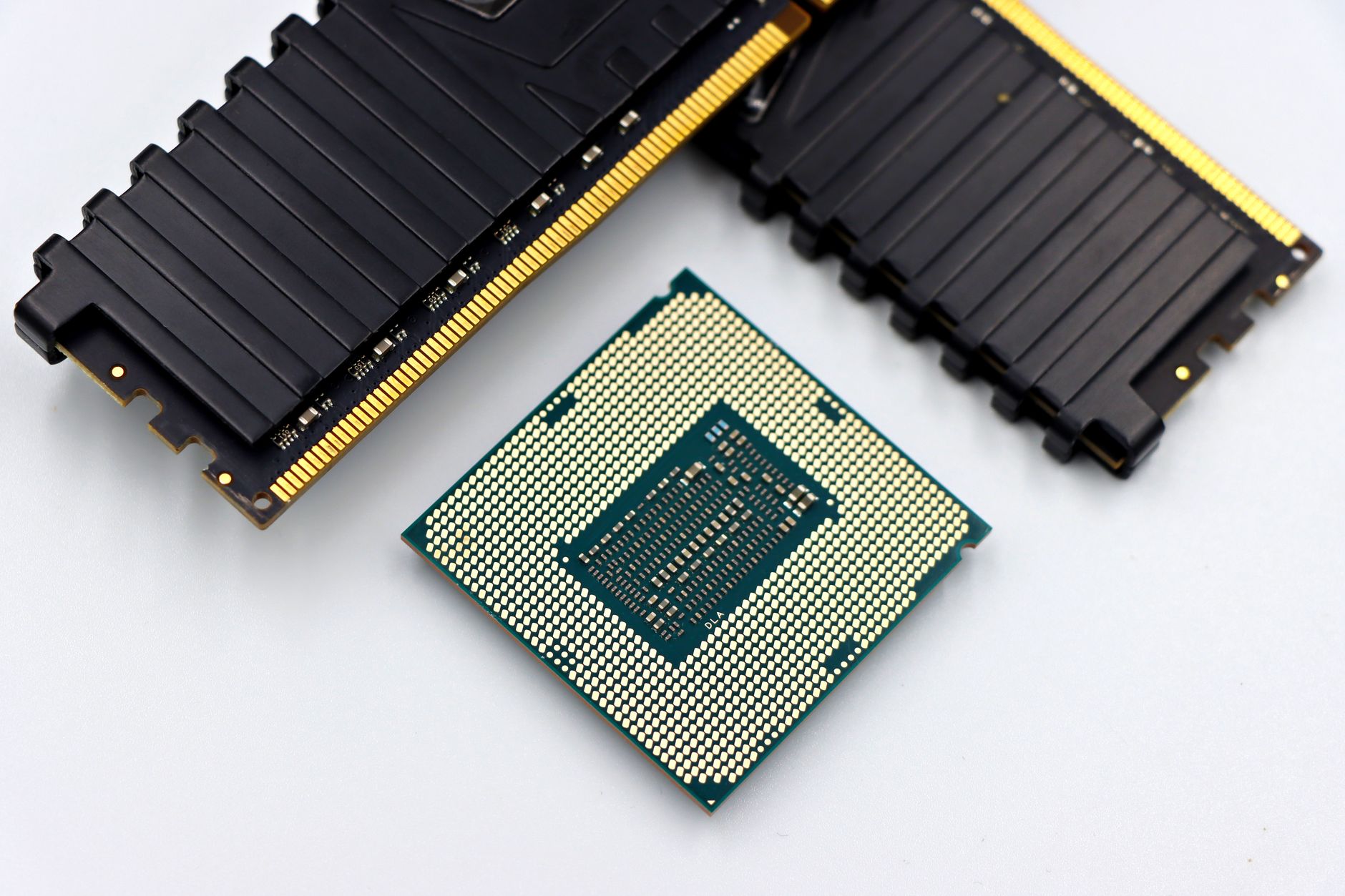
Photo by Marta Branco on Pexels
The implication for the broader artificial intelligence news cycle is that "bigger" is no longer the only credible scaling axis. Memory-optimized architectures could shift cost structures for downstream application developers by reducing inference-side compute spend.
Step 4: Evaluate Cross-Sector Biosecurity Frameworks
Fourth, assess the policy and safety layer. Google DeepMind and Isomorphic Labs jointly published a bioresilience roadmap in July 2026 describing how their tools—including AlphaFold-derived protein structure predictions and Gemini-based sequence analysis—should be governed to prevent misuse in synthetic biology. The framework proposes tiered access controls, red-teaming requirements, and partnerships with DNA synthesis providers to screen potentially dangerous sequences.

Photo by Tima Miroshnichenko on Pexels
This development intersects directly with the public health agency evaluations in Step 1. According to Google DeepMind's published framework, "responsible deployment of biological AI tools requires layered technical safeguards and ongoing third-party oversight." A contrarian view worth noting: critics argue that self-regulation by frontier labs is insufficient, citing gaps in third-party audit capacity. The resolution will likely depend on whether US regulators formalize these practices into binding standards within the next 18 months.
[Internal Link: understanding AI safety frameworks and regulatory landscapes]
Step 5: Verify Sources and Cross-Reference Data
Finally, establish a verification workflow. A reliable artificial intelligence news review should anchor each claim to at least one primary source: a government press release, an SEC filing, a peer-reviewed preprint, or the issuing organization's official statement. Secondary outlets frequently compress timelines, conflate announcements, or attribute quotes incorrectly.
The minimum viable verification stack for tracking AI developments in 2026 includes:
- Primary source confirmation: locate the issuing organization's official release within 24 hours of any reported announcement.
- Funding validation: cross-reference disclosed round sizes against SEC Form D filings or equivalent international databases.
- Model benchmark reproducibility: when benchmarks are cited, verify whether they were run by an independent third party or by the model's developer.
- Quote attribution check: confirm direct quotes against recorded transcripts or published interviews, never against paraphrased summaries.
Troubleshooting Common Failures
Several recurring errors distort the public's understanding of artificial intelligence news. Below are the most frequent and how to mitigate them.
Failure 1: Conflating announcement dates with availability dates. A model "release" announcement does not equate to public access. Developers often stage access via waitlists or API tier gating that can extend several weeks beyond the announcement. To mitigate, always check the official model card or developer portal for current access tiers before reporting capability claims.
Failure 2: Misreading funding stages. A $700 million Series B is structurally different from a $700 million strategic investment from a single corporate backer. Mix-ups here distort competitive analysis. Cross-reference with Crunchbase or investor press releases.
Failure 3: Overweighting benchmark scores. Reported benchmark gains of 5-10% on tasks like MMLU rarely translate into proportional improvements on production workloads. Real-world evaluations conducted by enterprises consistently lag headline benchmark claims by 10-25 percentage points.
Failure 4: Treating aggregator headlines as verified facts. Headlines optimized for engagement frequently omit qualifiers present in the underlying article. Skim the full body of the source before citing it.
Failure 5: Ignoring compute and memory constraints. Architectural claims about long-context performance are meaningless without disclosing hardware assumptions. A model claiming 1M-token context on a custom accelerator is not equivalent to one running on commodity GPUs.
[Internal Link: frequently asked questions about AI developments]
Frequently Asked Questions
Q: What is the current US federal position on large language models in healthcare?
A: US public health agencies are evaluating OpenAI and Anthropic models under a structured stress-test protocol announced in July 2026. The evaluation focuses on clinical accuracy, bias detection, and operational reliability before any patient-facing deployment. The agencies have not yet committed to procurement timelines.
Q: How much funding has been deployed into healthcare AI in mid-2026?
A: At least $755 million in disclosed healthcare AI funding was announced in a single week of July 2026. This includes a $55 million round for Bunkerhill Health and a $700 million round for Neko Health. Both companies target preventive and longitudinal care applications.
Q: What distinguishes Kimi K3 from US frontier models?
A: Kimi K3, developed by Moonshot AI, allocates silicon area to high-bandwidth memory rather than additional compute units. This enables sustained context windows exceeding 1 million tokens with reduced inference-time compute costs. The architecture represents a deliberate divergence from the US scaling playbook.
Q: How are biosecurity risks being addressed in frontier AI development?
A: Google DeepMind and Isomorphic Labs published a bioresilience framework in July 2026 proposing tiered access controls, red-teaming requirements, and partnerships with DNA synthesis providers. The framework remains voluntary but is being considered as a baseline by some US regulators.
Q: What are the most common errors in reporting AI funding rounds?
A: Reported round sizes frequently diverge from SEC filings by 10-20%, and funding stages (Series A vs. strategic investment) are often mislabeled. Investors and analysts should cross-reference every round against the primary disclosure in regulatory databases.
Q: Where can I find verified primary sources for artificial intelligence news?
A: Primary sources include government press releases, SEC Form D filings, peer-reviewed preprints on arXiv, and official model cards from the issuing organizations. Aggregator outlets are useful for discovery but should never serve as the sole citation for funding or capability claims.
Q: How long does it typically take for a federal AI evaluation to translate into procurement?
A: Federal evaluations of frontier AI models typically span 12-24 months from initial review to procurement authorization. The OpenAI and Anthropic reviews announced in July 2026 are unlikely to produce clearance decisions before mid-2027 under standard validation protocols.
Conclusion
The artificial intelligence news cycle in July 2026 reflects three simultaneous inflection points: federal-level model evaluation, capital concentration in preventive healthcare AI, and architectural diversification in open-weight model design. Taken together, these developments suggest that the sector is moving past the "scale at all costs" phase and into a period defined by domain-specific validation, targeted funding, and structured safety frameworks. Readers who establish rigorous verification habits now will be better positioned to distinguish substantive breakthroughs from incremental announcements as the pace of reporting accelerates through late 2026.
[Internal Link: comprehensive guide to tracking AI industry developments]